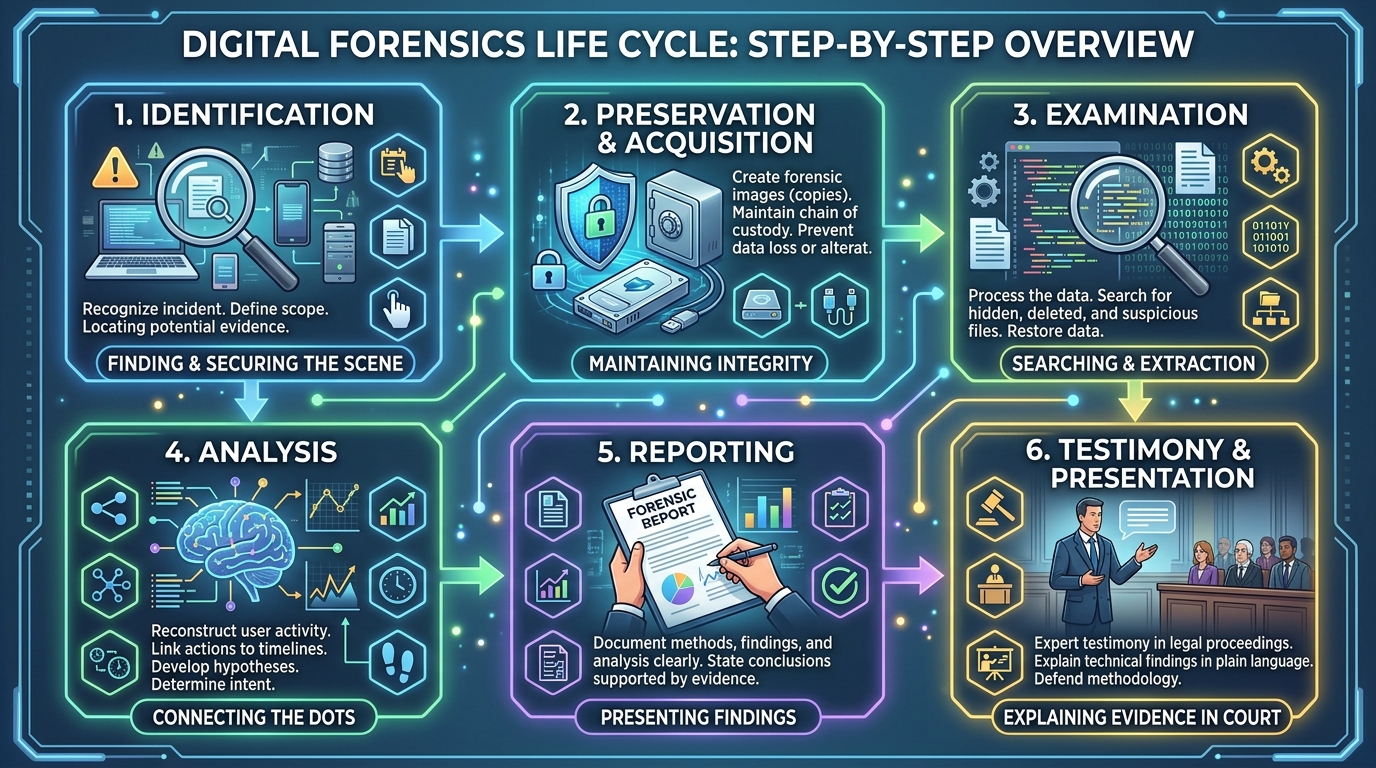

Digital forensics is a structured process used to identify, collect, analyze, and present digital evidence in a reliable and legally acceptable way. It plays a critical role in cybersecurity, law enforcement, and corporate investigations where digital devices are involved. The digital forensics life cycle provides a clear framework that ensures evidence is handled properly, maintaining its integrity from the moment it is discovered until it is presented in court or used for decision-making.
Identification of Digital Evidence
The first step in the digital forensics life cycle is identifying potential sources of evidence. This includes computers, mobile devices, servers, storage drives, and even cloud-based systems where relevant data might exist. Investigators must determine what devices or systems are involved in the incident.
Proper identification is important because missing a key source can affect the entire investigation. At this stage, investigators also define the scope of the case and decide what type of data needs to be collected for further analysis.
Preservation of Evidence
Once evidence is identified, it must be preserved carefully to prevent any alteration or loss. This step ensures that the original data remains unchanged and can be verified later if required. Techniques like creating forensic images and using write-blockers are commonly used.
Maintaining the chain of custody is also critical during preservation. This means documenting who handled the evidence, when it was handled, and how it was stored. Proper documentation ensures the evidence remains valid and trustworthy.
Collection and Acquisition
In this stage, investigators collect the identified data and create copies for analysis. Instead of working on original devices, forensic experts use duplicated data to avoid damaging the original evidence.
Data acquisition must be done using specialized tools and methods to ensure accuracy. Even small errors during collection can lead to incomplete or corrupted evidence, which may affect the investigation outcome.
Examination and Analysis
After data is collected, it is examined and analyzed to find relevant information. This includes recovering deleted files, identifying suspicious activity, and understanding patterns related to the case.
Analysis involves filtering large amounts of data to focus only on useful evidence. Investigators use forensic software to interpret data and build a timeline of events, which helps in understanding what actually happened.
Reporting and Presentation
The final step is reporting the findings in a clear and structured format. The report must include all relevant evidence, analysis results, and conclusions drawn from the investigation. It should be easy to understand for non-technical audiences such as legal professionals.
In some cases, forensic experts may present their findings in court. Therefore, the report must be accurate, unbiased, and supported by proper documentation to ensure credibility and acceptance.
Frequently Asked Questions
What is digital forensics
It is the process of investigating digital devices to collect and analyze evidence.
Why is the life cycle important
It ensures that evidence is handled properly and remains reliable.
What is chain of custody
It is a record of how evidence is handled and stored during an investigation.
Can digital evidence be altered
Yes, if not handled properly, which is why preservation is important.
Where is digital forensics used
It is used in cybersecurity, criminal investigations, and corporate cases.
Conclusion
The digital forensics life cycle provides a systematic approach to handling digital evidence from identification to presentation. Each step plays a crucial role in maintaining data integrity and ensuring accurate investigation results. By following this structured process, investigators can uncover reliable evidence and support decision-making in legal, corporate, and cybersecurity environments.