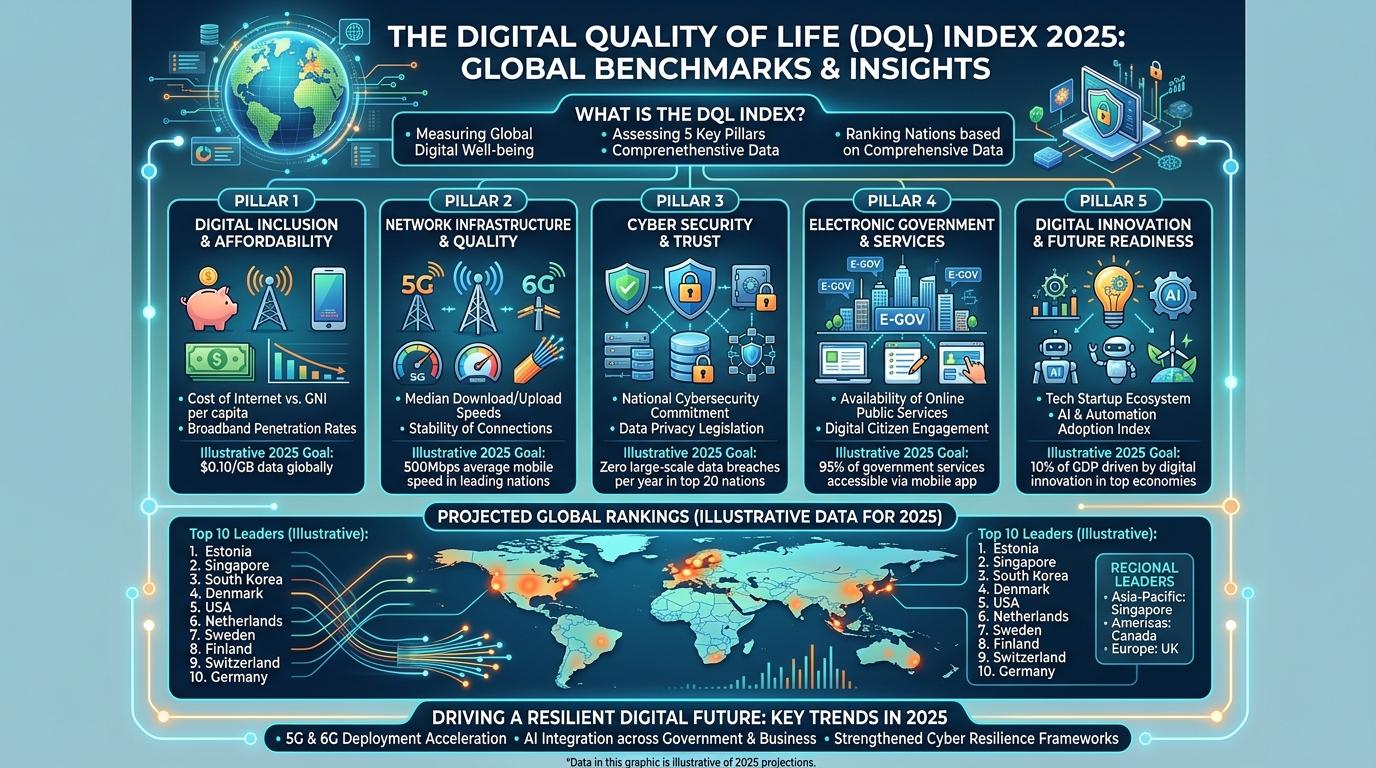

The Digital Quality of Life Index is a global ranking system that measures how well countries provide digital well-being to their citizens. It evaluates factors like internet affordability, speed, security, digital infrastructure, and online services. In 2025, this index continues to highlight how digital access and technology impact everyday life, from communication and work to education and financial services. It helps individuals, businesses, and governments understand the quality of digital environments across different countries.
What Does the Index Measure
The Digital Quality of Life Index focuses on multiple important factors that define digital living standards. These include internet speed, affordability, online security, digital infrastructure, and the availability of e-government services. Each of these components plays a key role in determining how easily people can access and benefit from digital technology.
By combining these indicators, the index provides a complete overview of how advanced and user-friendly a country’s digital ecosystem is. Countries with better rankings usually offer faster, cheaper, and more secure internet access, along with strong digital services for citizens.
Key Factors in the 2025 Ranking
In 2025, internet affordability remains one of the most important factors in the index. Countries where people spend less of their income on internet services tend to rank higher. This ensures that digital access is not limited to only a small portion of the population.
Internet quality, including speed and stability, is another major factor. Faster and more reliable connections improve productivity, support online education, and enable digital businesses to grow. Cybersecurity and data protection are also critical in determining how safe users feel online.
Importance of Digital Quality of Life
The Digital Quality of Life Index is important because it shows how technology directly affects daily life. Countries with strong digital environments provide better opportunities for education, remote work, healthcare services, and online businesses.
It also helps governments identify areas that need improvement. By understanding their ranking, countries can invest in better infrastructure, reduce costs, and improve digital security for their citizens.
Global Trends in 2025
In 2025, developed countries continue to dominate the top positions due to advanced infrastructure and strong digital policies. However, many developing countries are improving rapidly by expanding internet access and investing in digital services.
There is also a growing focus on cybersecurity and data privacy. As digital usage increases, countries are working to protect users from online threats while maintaining accessibility and affordability.
Frequently Asked Questions
What is the Digital Quality of Life Index
It is a global ranking that measures digital well-being based on internet access, affordability, and security.
Who publishes this index
It is published by the company Surfshark.
Why is this index important
It helps compare digital environments across countries and highlights areas for improvement.
What factors affect rankings
Internet speed, affordability, infrastructure, and cybersecurity are key factors.
Does it impact everyday life
Yes, it affects how easily people access digital services like education, work, and communication.
Conclusion
The Digital Quality of Life Index in 2025 provides valuable insights into how countries perform in terms of digital access, affordability, and security. It highlights the importance of strong digital infrastructure in improving everyday life and creating opportunities for growth. As technology continues to evolve, this index will remain an important tool for understanding and improving global digital living standards.