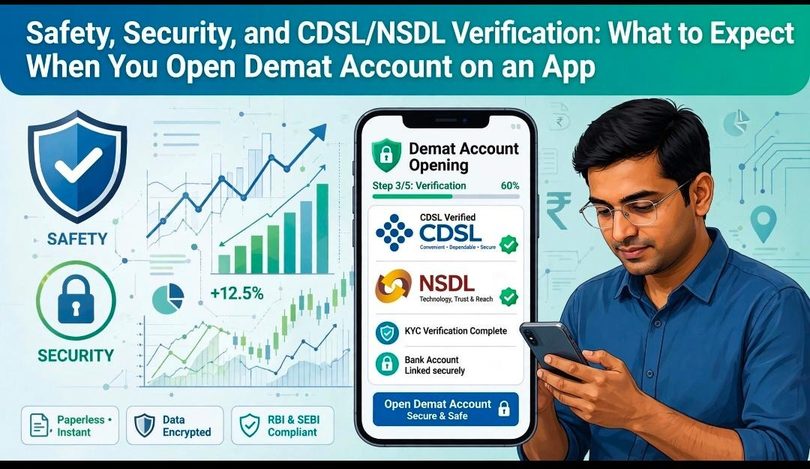

Opening a Demat account through an app allows investors to complete much of the onboarding process digitally. Since a Demat account is used to hold securities electronically, identity verification and account security are important parts of the process. CDSL and NSDL provide the underlying depository infrastructure through which securities are held and transferred. Understanding these systems can help beginners know what to expect during digital account opening. This article explains the security measures, KYC process and CDSL/NSDL verification involved when you open Demat account on an app.
What Happens When You Open a Demat Account?
A Demat account is opened through a Depository Participant (DP) registered with CDSL or NSDL. The DP acts as the intermediary between the investor and the depository.
During digital onboarding, the investor provides the required personal and financial information and completes the applicable KYC process.
The information is then verified before the account can be activated, subject to the intermediary’s procedures and regulatory requirements.
Understanding CDSL and NSDL
CDSL and NSDL are India’s two securities depositories. They maintain securities in electronic form and facilitate their transfer through registered Depository Participants.
When an investor purchases shares, the securities are credited to the investor’s Demat account through the relevant depository infrastructure.
| Term | Role |
| CDSL | Central depository that maintains securities electronically |
| NSDL | National depository that maintains securities electronically |
| Depository Participant | Intermediary through which investors access depository services |
| Demat account | Account used to hold securities electronically |
The investor generally interacts with the DP or its app rather than directly managing the underlying depository system.
What is KYC Verification?
Know Your Customer (KYC) is an important part of opening a Demat account. It involves verifying information provided by the applicant to establish their identity and other required details when they open Demat account.
The digital process may involve submitting or validating:
- PAN details
- Identity information
- Address details
- Mobile number
- Email address
- Bank account information
- Other information required by the intermediary
The exact process can vary depending on the platform and applicable requirements.
Why PAN Verification Matters
PAN is an important identifier for financial and securities-related transactions in India.
During account opening, the PAN details provided by the applicant may be validated as part of the KYC process.
Users should ensure that their personal information matches the details associated with their financial records. Any discrepancy may require clarification before the account-opening process is completed.
Bank Account Verification
A bank account is generally linked with the trading and investment setup to facilitate movement of funds.
During onboarding, users may be required to provide bank account details and supporting information. The platform can conduct appropriate verification before the account becomes fully operational.
Keeping bank and personal information updated can also help avoid issues with future transactions.
Security Features in a Demat App
A demat app handles financial and securities-related information, making account security an important consideration.
Depending on the platform, security features may include:
- Password or PIN-based login
- Two-factor authentication
- Device verification
- One-time passwords
- Session controls
- Transaction notifications
Users should enable the security features available on their platform and avoid sharing login credentials or authentication codes.
CDSL and NSDL Account Verification
Once a Demat account is created, investors can receive information related to their securities holdings through the depository framework.
Depositories also provide mechanisms that allow investors to access or receive information regarding their Demat accounts and transactions.
This provides an additional way to verify that securities credited to the account are reflected correctly.
Investors should review transaction records and account statements regularly and report discrepancies through the appropriate channel.
Protecting Your Demat Account
Digital security also depends on user behaviour.
Investors should:
- Use strong and unique passwords
- Avoid sharing OTPs or PINs
- Keep the app updated
- Avoid clicking unknown financial links
- Use secure networks when accessing the account
- Check transaction alerts regularly
No legitimate support representative should require a user to disclose sensitive authentication information such as an OTP or password.
What to Check Before Opening an Account
Before selecting a demat app, users can review the intermediary’s details and the services provided.
Important areas to check include:
- Depository association
- Account opening process
- Applicable charges
- Security features
- Customer support
- Trading and investment facilities
- Account statements and reporting features
Understanding these details can make the account-opening process more transparent.
Conclusion
Security and verification are central to the process of opening a Demat account digitally. Understanding the role of CDSL and NSDL, completing KYC accurately and using available security features can help investors manage their accounts responsibly. Digital platforms such as 5Paisa can bring account opening, trading and demat management features into an app-based experience. Checking the platform’s security measures and understanding how verification works can help users approach digital investing with greater awareness.